
WildOcean
The Arctic, Antarctica and South Georgia Island


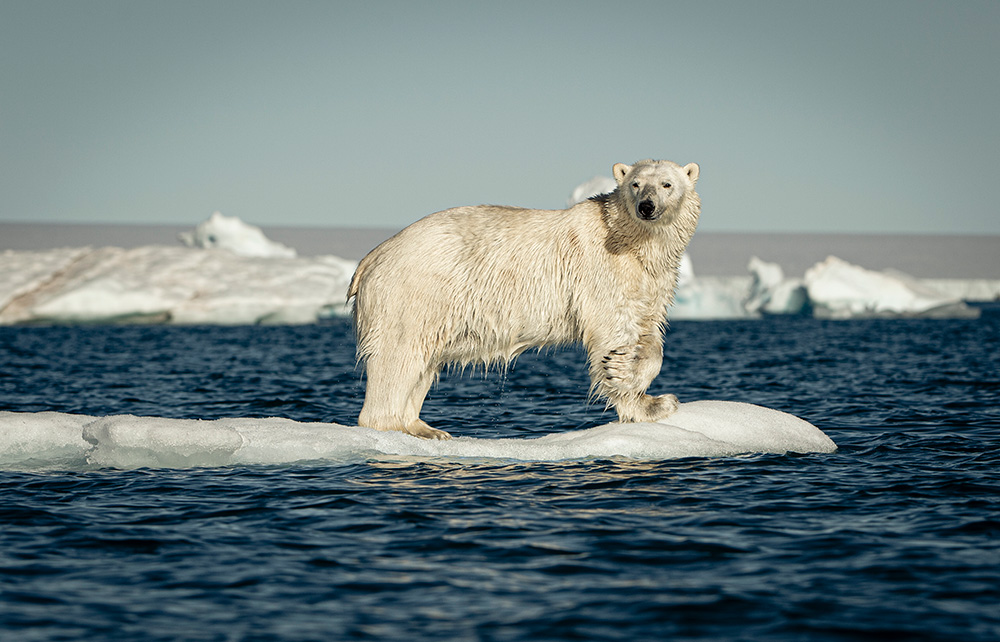
On the deck with me at the time was perhaps the world’s most pre-eminent polar bear scientist, Dr Ian Stirling. Through him, I learned that although they are extremely capable swimmers, polar bears, where the option exists, will invariably choose a longer route that offers the chance of staying dry, than a shorter alternative route that requires swimming. The irony is, however, that polar bears are being forced to swim more often and greater distances because a warming climate is causing the earlier and more widespread break up of sea ice throughout the Arctic Ocean.
In a United States geological survey studying the increasing distances polar bears are now being required to swim in the face of shrinking ice cover, researcher George Durner recorded an extraordinary example. A female polar bear and her yearling cub stepped off the last of the sea ice in the Bering Sea and began to swim. She swam for nine days before she finally emerged again from the water on the coast of Alaska. She had covered the incredible distance of 687 kilometres (427 miles) through a frigid sea, losing 22 percent of her body weight and her cub in the process.
As I learned more, so the polar bear began to emerge as the unwilling but compelling icon of climate change.
In a United States geological survey studying the increasing distances polar bears are now being required to swim in the face of shrinking ice cover, researcher George Durner recorded an extraordinary example. A female polar bear and her yearling cub stepped off the last of the sea ice in the Bering Sea and began to swim. She swam for nine days before she finally emerged again from the water on the coast of Alaska. She had covered the incredible distance of 687 kilometres (427 miles) through a frigid sea, losing 22 percent of her body weight and her cub in the process.
Change does not require greatness or miracles, it is the responsibility and possibility in each of us.
Peter Pickford